
Florida knows how to make an entrance with weather.
One minute, the yard is bright and still. Minutes later, rain is rushing off the roof, palm fronds are twisting sideways, and water is racing across every hard surface it can find. Summer storms move quickly, but the mess they leave behind can linger much longer than the clouds.
Rain reveals the parts of a landscape people don’t always think about when everything is dry. It shows where water wants to travel, where soil has started to shift, and where plant beds are taking more punishment than they should. It also shows whether the yard was designed to handle Florida weather or simply look good between storms.
Good drainage doesn’t need to be the flashiest part of the landscape. It just needs to work before the next downpour starts making decisions for you.
Stormwater Has a Favorite Path
Water will always choose the easiest route through a property.
Sometimes, the route runs neatly toward a drain or swale. Other times, it cuts straight through a plant bed, gathers beside the driveway, or settles into the same low spot in the lawn. Once water starts following that path over and over, the yard can begin changing around it.
Soil may loosen. Mulch may drift. Turf may thin. Plant roots may become exposed. Small channels may form where water keeps dragging material through the landscape.
Residents can learn a lot by watching the yard during a storm from a covered spot. Look for water that rushes instead of spreads. Notice where runoff gains speed. Pay attention to places where water seems to hit a wall and sit. Those patterns matter because repeated movement can turn one heavy rain into a recurring landscape problem.
Pre-Storm Preparation Should Be Simple and Consistent
Storm prep doesn’t have to mean a full weekend project.
Clearing loose debris makes a meaningful difference before heavy rain. Leaves, palm fronds, seed pods, and small branches can block drains or redirect water into places it shouldn’t go. Gutters and downspout openings also deserve attention because roof runoff can overwhelm a small bed faster than most people expect.
Downspouts should send water away from vulnerable areas when possible. Plant beds directly under rooflines often take a beating during storm season, especially when water falls hard in one concentrated spot. When beds keep washing out beneath the same roof edge, the issue usually isn’t the mulch. Runoff needs a better route.
Irrigation settings also deserve a quick review when stormy weeks settle in. Rain can reduce the need for scheduled watering, while soggy areas may suffer if the system keeps running like nothing changed. Smart watering supports the landscape instead of adding stress to already wet soil.
Post-Storm Walks Tell the Truth
Once the rain clears, take a slow walk through the property before raking everything back into place.
Use the same route each time so recurring issues become easier to spot. Check the lawn, beds, walkways, driveway edges, downspouts, and low corners of the yard. Focus less on whether the property looks messy for the moment and more on whether the same mess keeps appearing in the same places.
Here’s what deserves attention after a heavy storm:
- Puddles that stay long after nearby areas have drained may point to grading or soil issues.
- Mulch that washes into the lawn or street usually means water is moving too fast through the bed.
- Exposed roots can mean soil is being carried away by repeated runoff.
- Turf that feels spongy underfoot may be holding too much moisture.
- Mud or sand collecting on walkways can show where water is dragging material across the property.
One storm can make any yard look dramatic. Repeated patterns are the part worth remembering.
Wet Soil Needs Patience
Storm cleanup can cause damage when residents rush back onto soaked ground.
Mowing over soft turf can leave ruts, compact the soil, and tear grass that was already stressed by heavy moisture. Walking through saturated beds can press soil around roots and make it harder for plants to recover. Raking too aggressively can disturb shallow roots that were exposed by runoff.
Give the landscape time to drain before doing heavier cleanup. Light debris can be removed once conditions are safe, but larger maintenance decisions should wait until the soil has settled. Patience protects the parts of the landscape you can’t easily see.
Standing water should also be treated carefully. When water stays in the same area for too long, adding more soil on top may look like a quick fix but often sends the problem somewhere else. Drainage should be corrected with the whole property in mind, not just the puddle that happens to be most visible.
Plant Beds Shouldn’t Act Like Bowls
Plant beds can either help manage stormwater or hold it in all the wrong places.
Bed shape, soil height, edging, downspout direction, and plant placement all affect how water behaves. Raised edges may keep mulch looking tidy on dry days, but they can also trap water during heavy rain. Bare spaces between plants can allow soil to splash and wash out. Dense, healthy plant coverage can help slow water down, but only when the right material is used in the right place.
Plants in storm-prone areas need more than pretty foliage. They need to tolerate wet periods, recover after heavy rain, and still handle Florida heat when the sun comes back out. Some locations may need stronger root systems to help hold soil. Other areas may need better drainage before new plant material has any chance of performing well.
Better beds work with water instead of pretending it won’t show up.
Good Storm Design Still Looks Beautiful
Drainage work doesn’t have to make a landscape feel overly engineered.
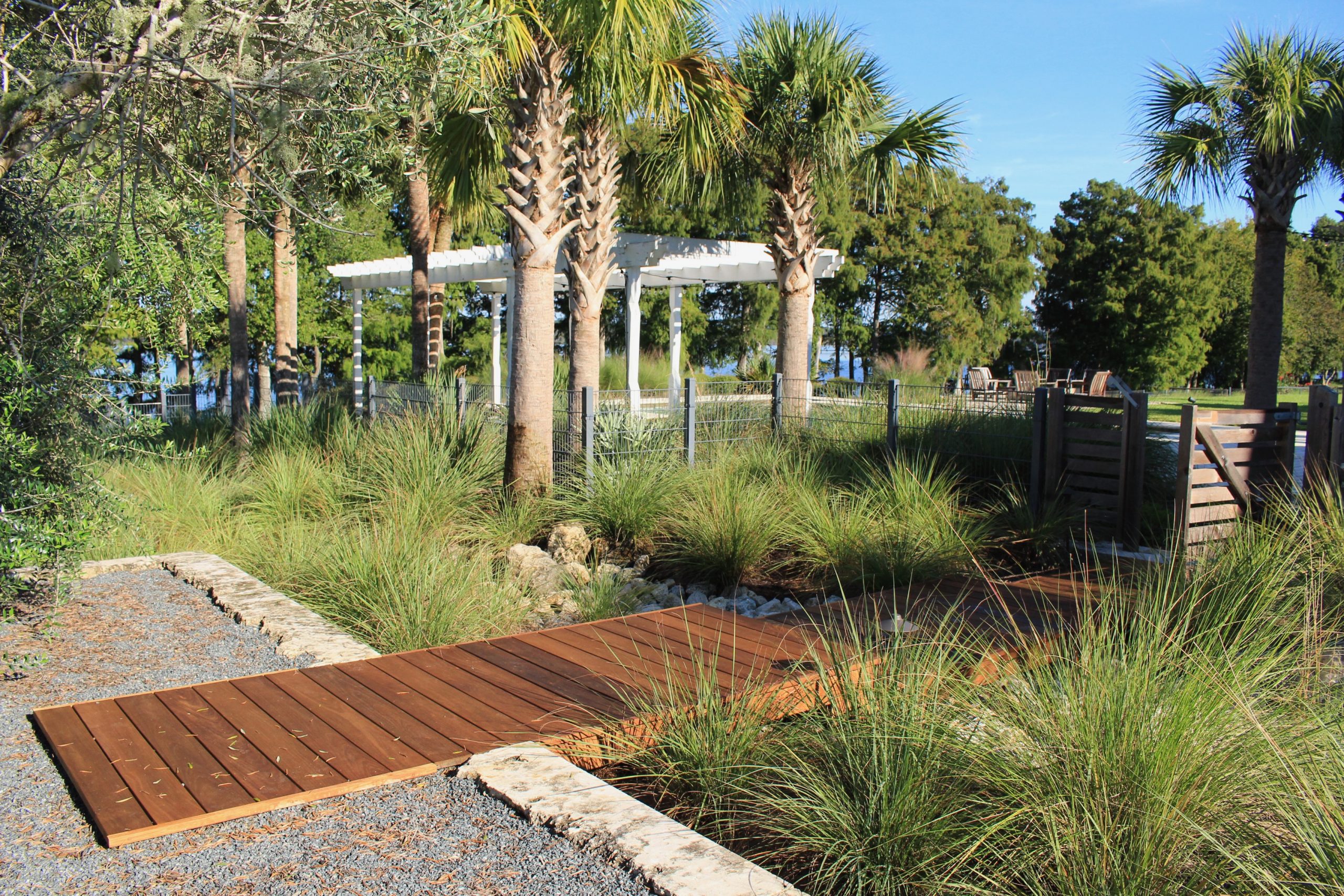
Well-planned Florida landscapes can guide water while still feeling lush and polished. Grading can be subtle. Planting beds can be shaped with purpose. Turf can be placed where it has a better chance to thrive. Palms, shrubs, and groundcovers can create movement and structure while helping protect soil from repeated storm impact.
Strong storm-ready design blends practical decisions into the look of the property. Visitors may only notice a clean lawn, healthy beds, and an outdoor space that recovers well after rain. Behind that finished look, water has been given somewhere better to go.
Florida weather will always keep you guessing, but your landscape shouldn’t have to.
Coastal Landscapes Can Help Your Yard Handle the Weather
When thunderstorms keep leaving your yard messy or waterlogged, Coastal Landscapes can evaluate the problem areas and create a plan that helps your landscape move water more effectively.
Call Coastal Landscapes at 386-428-6788 or visit coastallandscapesflorida.com to start planning a landscape built for Florida weather.