
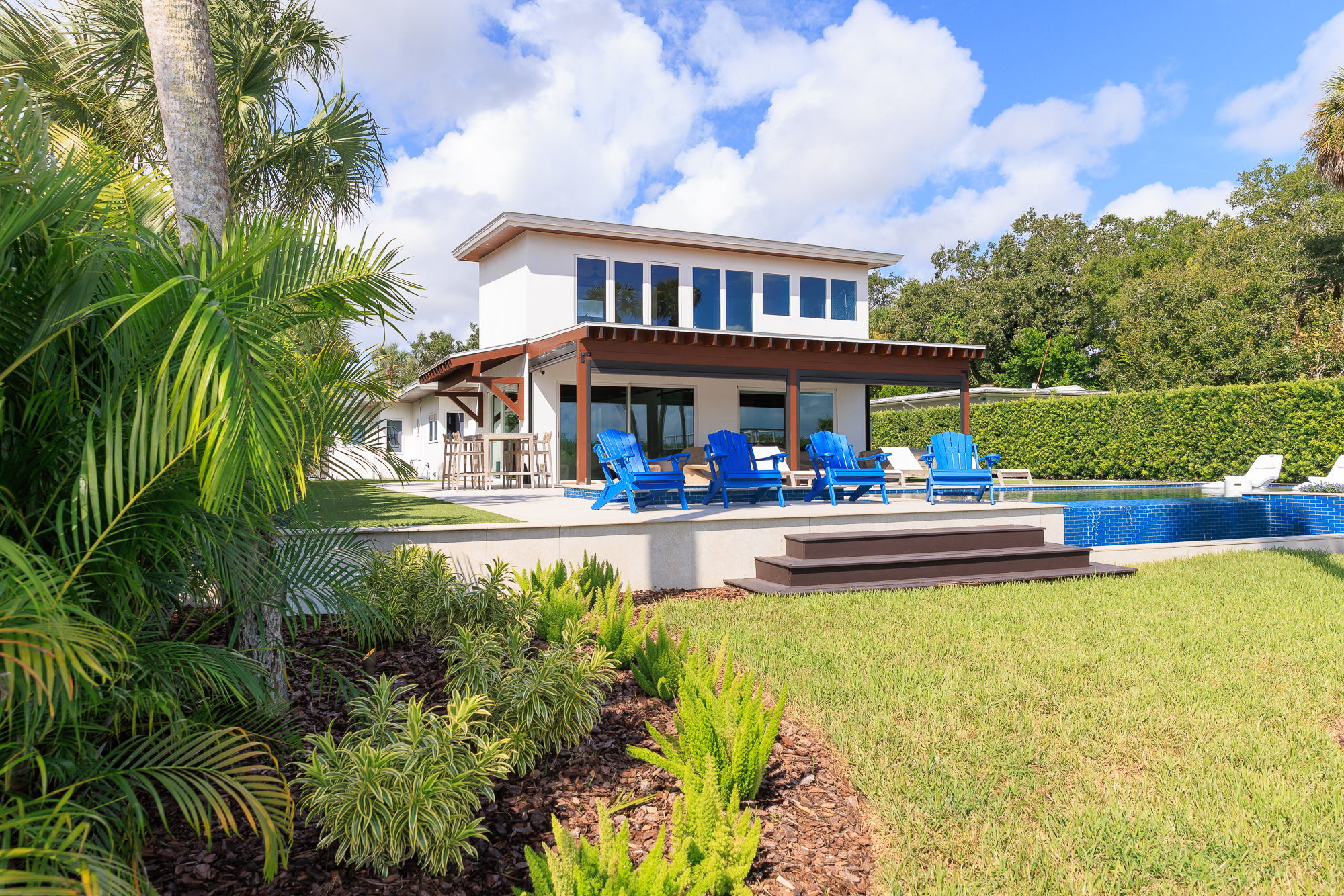
Most lawn frustration starts with shade, not maintenance
When a Florida lawn struggles, many homeowners assume it’s a watering issue or a care issue. More often, it’s a light issue. Grass can’t perform the same way in shade as it does in full sun, no matter how consistent the maintenance is.
Shade limits how grass grows and recovers. Combine that with Florida heat, humidity, and occasional heavy rain, and shaded lawn areas often thin out, stay damp longer, or never quite look finished. That doesn’t mean the lawn’s failing. It means the design may not be aligned with the conditions.
A great looking yard isn’t about forcing uniform grass everywhere. It’s about choosing where lawn makes sense and letting the landscape work with the shade that already exists.
Not all shade behaves the same way
Shade in Florida isn’t just “sun” or “no sun.” Some areas get filtered light through trees. Others get a few intense hours and then stay shaded during peak heat. Some zones dry quickly. Others stay cool and damp.
That’s why one shaded section of a yard can look fine while another struggles, even though they’re only a few feet apart. Walls, tree canopies, fences, and neighboring structures all change how light and airflow move.
A few high-level considerations can help clarify what’s happening:
- Identify which areas get consistent shade versus partial shade
- Treat shaded lawn zones differently instead of expecting uniform results
- Focus lawn performance where it matters most, not along every edge
Rethinking grass as part of the overall design
The most polished Florida landscapes don’t rely on grass everywhere. They use lawn intentionally and allow other elements to take over where shade makes turf unreliable. That shift often makes the entire property feel higher end and cohesive.
This might mean shrinking lawn areas under dense canopy, adjusting transitions between turf and planting beds, or using layout changes to make shaded zones feel purposeful instead of problematic. When the lawn’s placed where it can actually succeed, maintenance becomes easier and the results feel more consistent.
A struggling shaded lawn isn’t a failure. It’s a signal that the layout may need refinement.
Designing lawns that look intentional in shade
Coastal Landscapes evaluates lawns through the lens of sun patterns, shade behavior, and how the space gets used. Sometimes the solution involves improving turf conditions. Other times, it involves redesigning the yard, so grass isn’t fighting an uphill battle.
If your lawn looks thin in shaded areas or feels like it never quite comes together, Coastal Landscapes can help you create a layout that works with shade, not against it, and delivers a cleaner, more finished landscape overall.